

Hamura Saimin Kauai: since 1952, Hamura Saimin has been ladling out homemade noodles and a secret-recipe broth from the same wooden building on Kress Street in Līhuʻe. Here’s how one woman’s plantation-camp delivery route became Kauaʻi’s most famous bowl, and what to order when you go.
Every island get one place everybody points to when you ask, “Eh, where the locals eat?” On Kauaʻi, plenty of people point to a little wooden building on Kress Street in Līhuʻe.
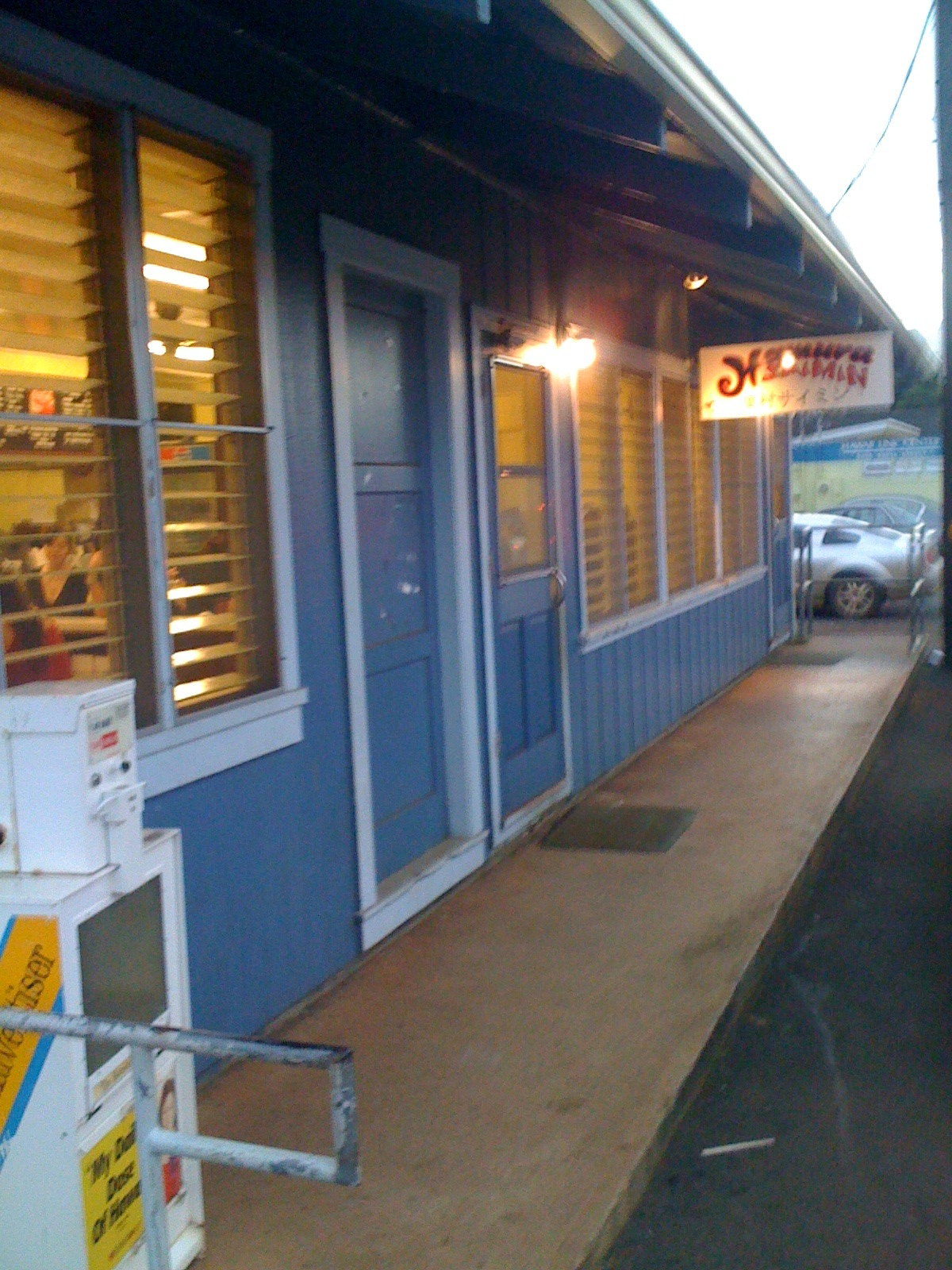
Hamura Saimin doesn’t look like a famous restaurant. It’s a converted Army barracks with U-shaped Formica counters and simple stools. You sit shoulder to shoulder with strangers, and nobody minds. The James Beard Foundation has honored it. The Hawaiʻi Tourism Authority has honored it. The bowls are still made the way a plantation-camp noodle seller worked them out more than 70 years ago.
A Ford sedan with the back seat taken out
The story starts with Aiko Hamura. She was born in Puʻunēnē, Maui, and in the 1940s she started selling fruits, vegetables and her homemade saimin noodles to families in the sugar plantation camps around Līhuʻe.
According to her daughter-in-law, Jean Hamura, Aiko made her rounds in a black Ford sedan with the back seat pulled out to make room for her goods. Picture that: a rolling noodle shop, bumping down cane-camp roads, feeding the people who worked the fields.
She didn’t open a restaurant until she had perfected her secret-recipe saimin broth. In 1952, Aiko and her husband, Charles Susumu Hamura, who was born at Kealia on Kauaʻi, opened Hamura Saimin in a converted Army barracks on Kress Street.
Five bowls a night
It wasn’t an overnight hit. For about the first 18 months, money was tight. Their daughter, Hazel Hiraoka, once put it plainly: “In those days, lucky if they sold five bowls a night.”
Then the coconut wireless did its thing. Word spread around Kauaʻi about the saimin, and the customers came. Hazel’s explanation for why it worked is about as local as it gets: “We are popular because our saimin and soup are the best. People like it because they can come in shorts. They feel at home.”
For years, Hamura’s stayed open until 4 or 5 a.m., feeding folks getting off late shifts along with the partygoers. Hazel remembered people calling her dad to say, “Don’t close. We’re bringing a gang.” And he would keep serving saimin until they left. That’s aloha, brah.
A Kauaʻi institution with national awards
In 2006, the James Beard Foundation named Hamura Saimin one of its “America’s Classics.”
In 2024, the Hawaiʻi Tourism Authority gave Hamura Saimin a Tourism Legacy Award, presented alongside Chef Sam Choy at the Hawaiʻi Tourism Conference. The award honors businesses that have built and kept up a legacy of aloha.
Through all of it, the place stayed in the family and stayed put. Aiko and Charles raised four children, and today their granddaughter, Lori Tanigawa, runs the business. In February 2026, Civil Beat columnist Lee Cataluna described Hamura’s as “still popular, still relevant, operating out of the same wooden building on Kress Street.” She called it “Kauaʻi’s saimin, second to none.”
What makes Hamura Saimin Kauai different
Hamura’s makes its own saimin noodles. The broth is still the secret recipe. A regular bowl comes topped with ham, kamaboko (fish cake) and green onions.
When Hamura’s opened, the menu was tiny: a few kinds of saimin and barbecue beef and chicken sticks, served to customers on just six wooden stools around the cook. Today the shop seats about 35, and the menu has grown to include fried noodles, crispy won tons and a dessert that has its own fan club.
What to order at Hamura Saimin Kauai
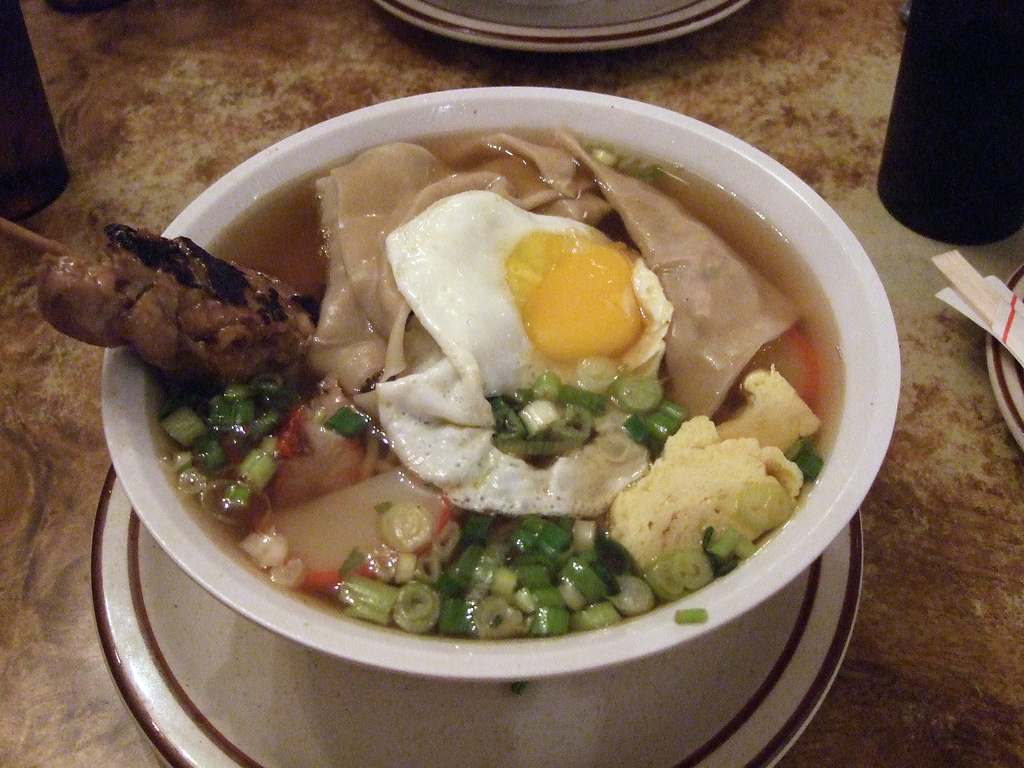
Special Saimin. This is the most popular bowl. It has everything from the regular, plus vegetables, onions, roast pork, won tons and an egg. If it’s your first time, start here.
Barbecue sticks, beef or chicken. Locals love these with their saimin. They’re slathered in a thick sauce and come off a little charred. Think yakitori, Kauaʻi style. Order more than you think you need.
Lilikoʻi chiffon pie. Light, airy and tart-sweet with passion fruit. Lori Tanigawa came up with the recipe herself, and now it’s almost as famous as the saimin. Get a slice. Or take home the whole pie. Nobody going judge you.
Fried noodles or crispy won tons. For the second visit. And there will be a second visit.
Tips for your visit
- Go early or go late. The lunch rush, roughly 11 a.m. to 1 p.m., brings a line. It moves, but plan for it.
- Be ready to share the counter. That’s part of the experience. Say hello to your neighbor.
- Parking is easy. There’s plenty of street parking nearby.
- Bring cash just in case. Hamura’s has been reported as cash only. Call ahead if you want to confirm.
- Wear your slippers. Like Hazel said, people can come in shorts and feel at home.
The secret is staying the same
Some businesses survive by changing with the times. Hamura Saimin survived by not changing much at all. Same building, same counters, same homemade noodles, same secret broth. It started with a woman, a Ford sedan and a pot of saimin, and it got through some lean early months on five bowls a night. More than seven decades later, her granddaughter keeps it going, and the line out the door is the proof.
If you’re landing at Līhuʻe Airport, Kress Street is just a short drive away. Make Hamura Saimin Kauai your first stop on the island. Your ʻōpū going thank you.
Looking for more stories like this? Browse our Hawaiʻi business spotlights. And if you run a local business with a story worth telling, apply to be featured. It’s always free. Hungry for more? See our Oʻahu food guide.

Visit Hamura Saimin Kauai
Where: 2956 Kress St, Līhuʻe, Kauaʻi, HI 96766
Hours: Open daily from 10 a.m. Recent listings show closing times around 9 to 9:30 p.m. Call before you go.
Phone: (808) 245-3271
This spotlight draws on reporting from The Garden Island (Hank Soboleski’s “Island History” column), the Hawaiʻi Tourism Authority via the Hawaiʻi Visitors and Convention Bureau, Honolulu Civil Beat, Catherine Toth Fox, and current Yelp and Apple Maps listings. Hours and payment details were current at the time of writing and may change.